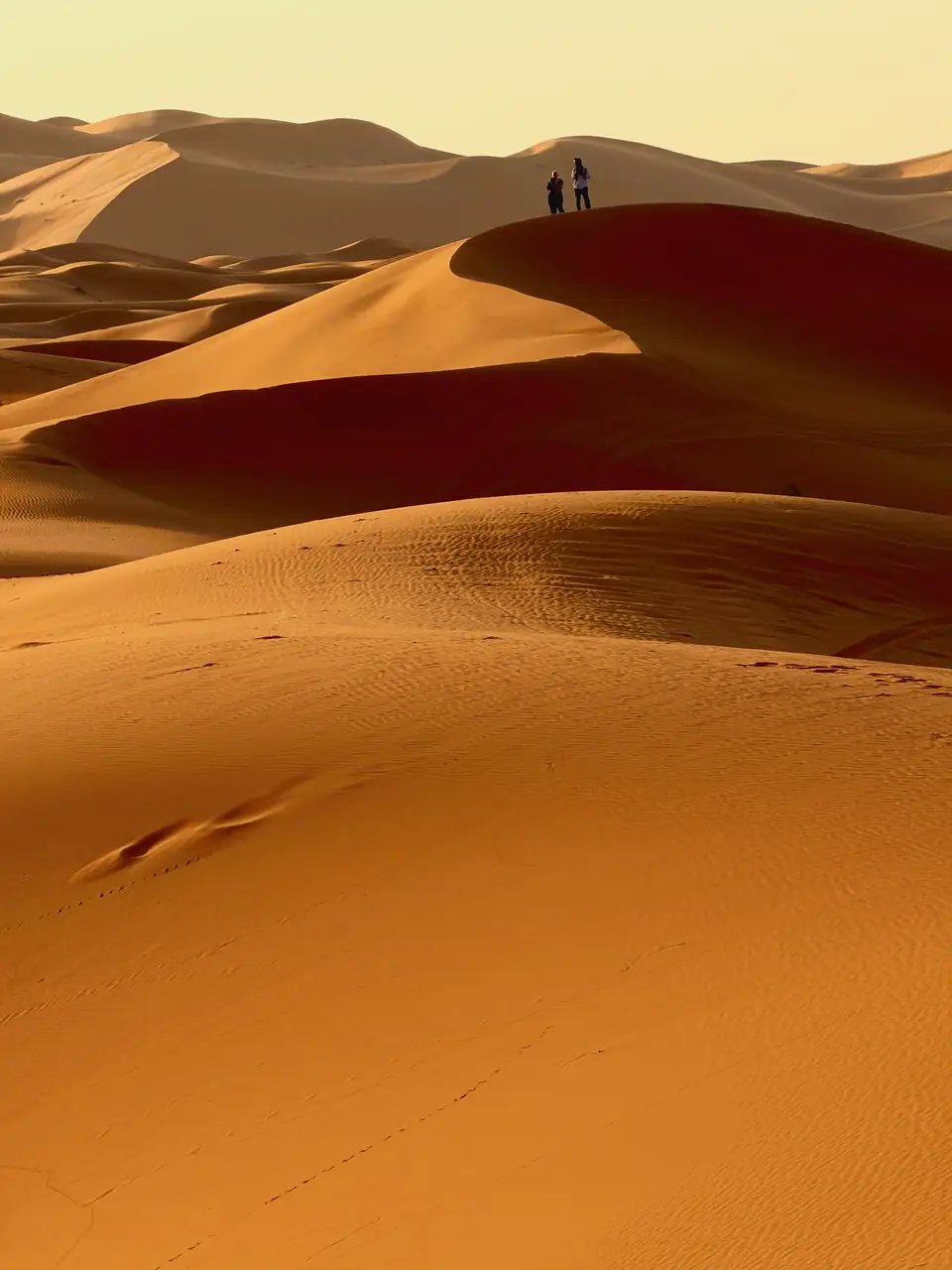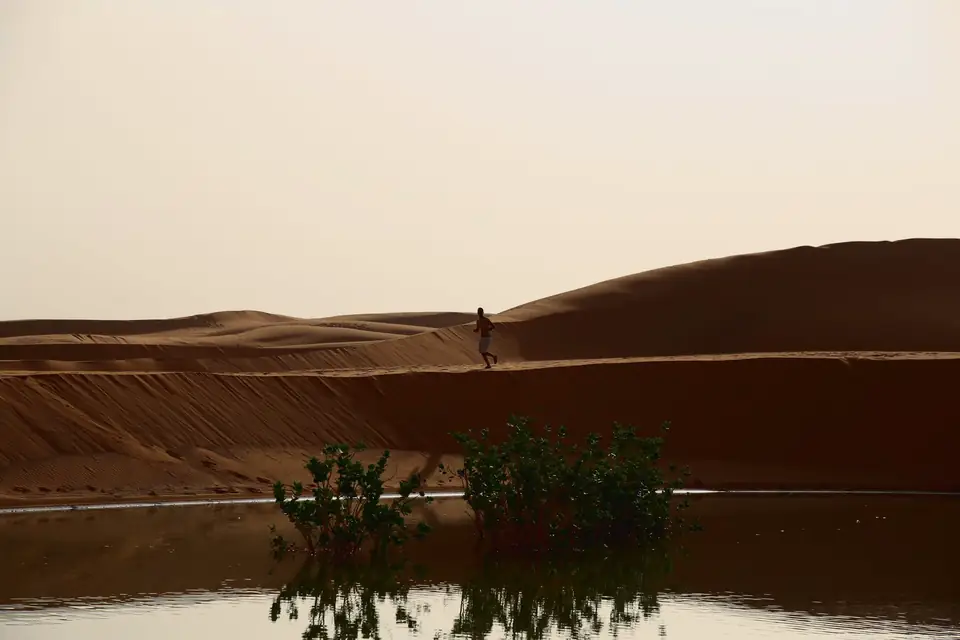
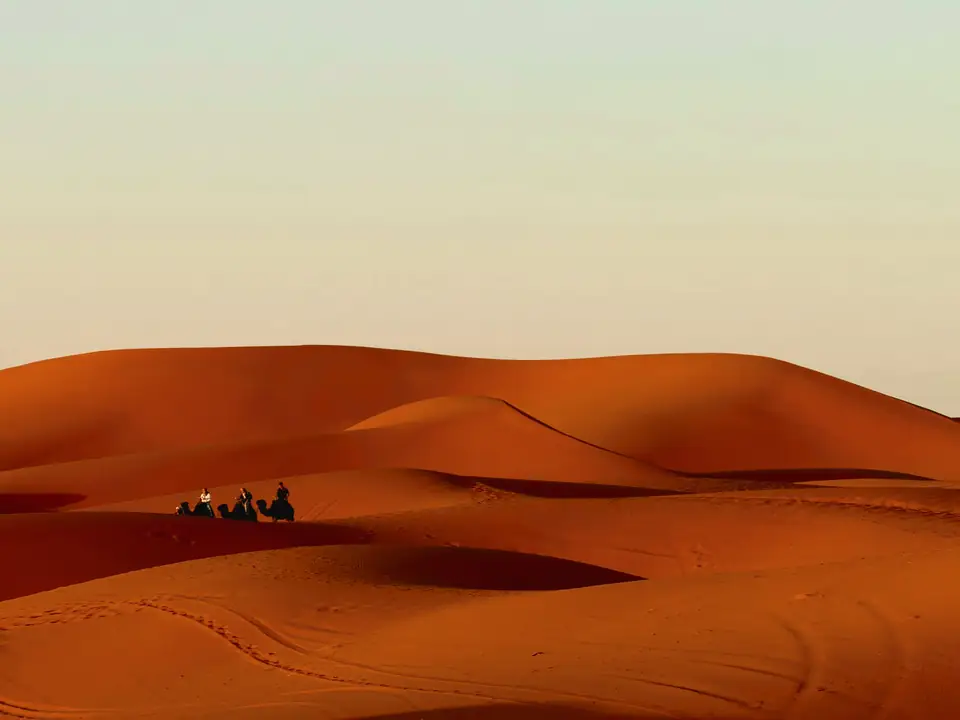
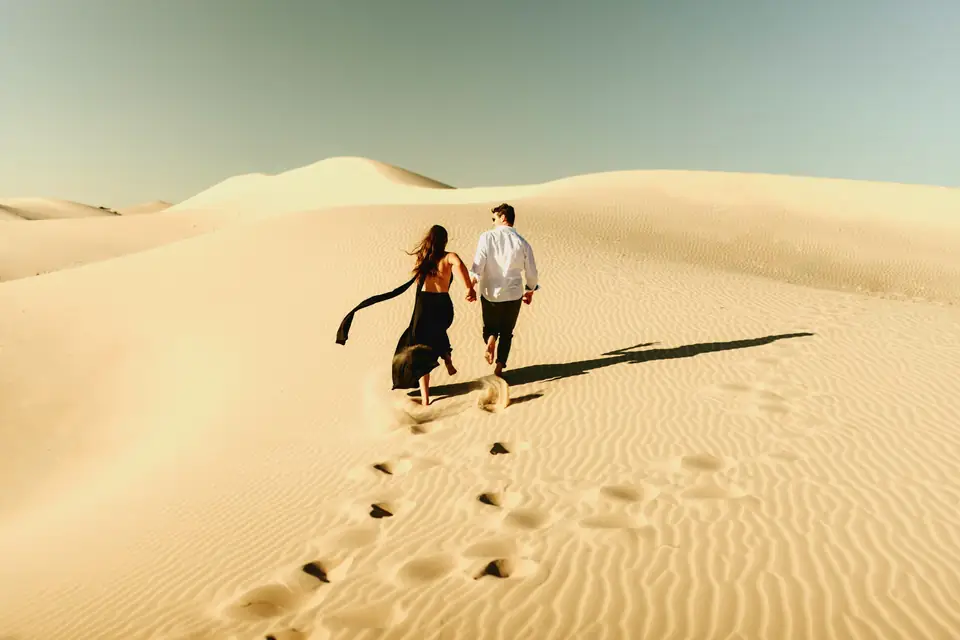
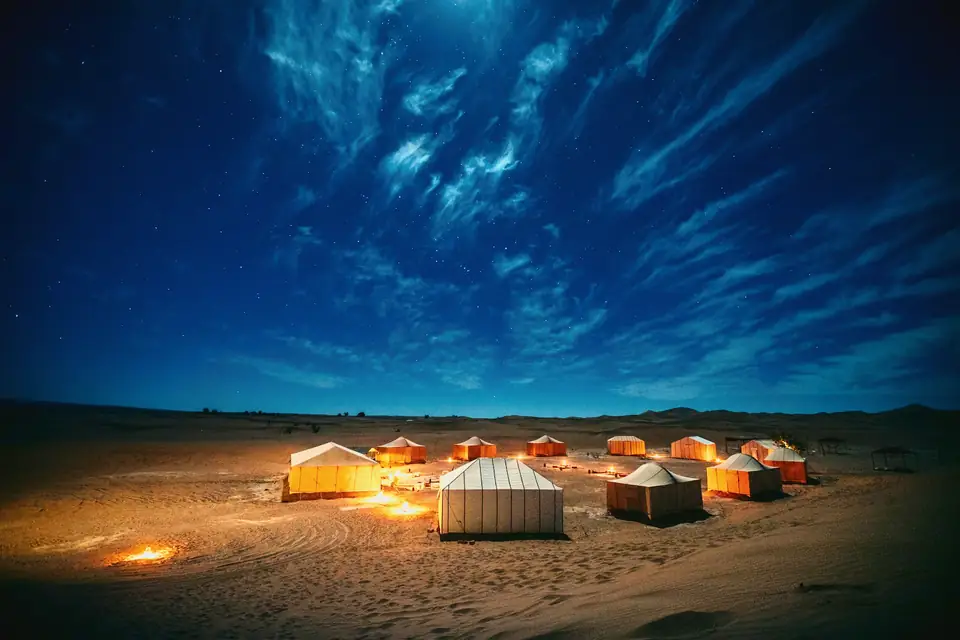
A night in a Sahara desert camp usually starts in the late afternoon and ends after breakfast, so you are there for less than a day. Most people expect the sunset to be the highlight. Often it is the silence after dinner, or the sky once the lights are out. This guide explains how a stay in the Erg Chebbi dunes at Merzouga runs and how to prepare for it.
Where the camps are
Merzouga sits at the edge of Erg Chebbi in south-eastern Morocco, about 560 km from Marrakech and roughly 450 km from Fes. Erg Chebbi's highest dunes are usually given as about 150 m. Because of the distance, most visitors arrive after a long drive or a stop on the way, rather than on a quick trip from a big city.
Getting to camp
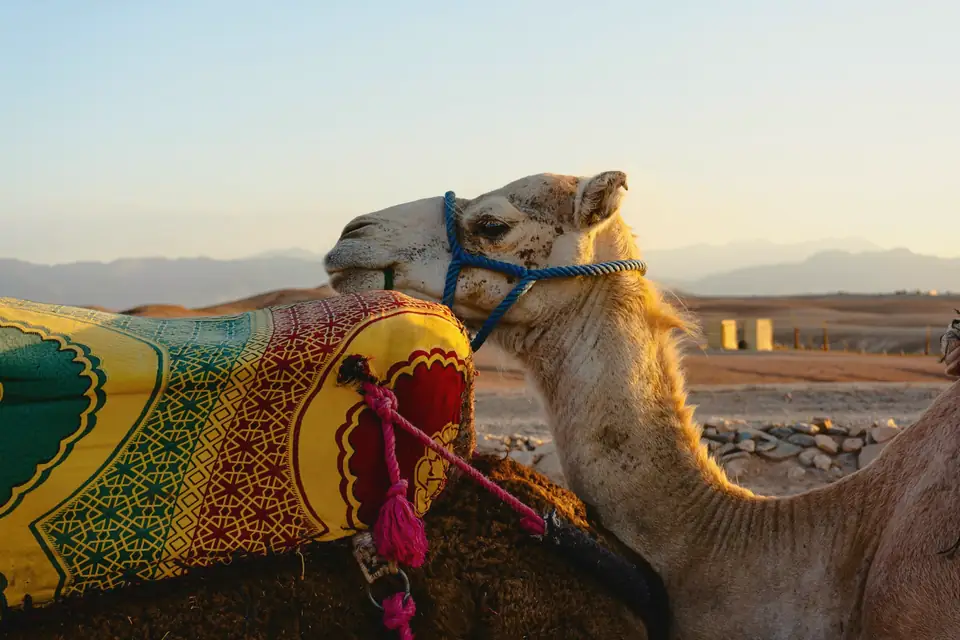
Each camp works differently, so ask before you book. At Dune Echo Desert Camp, we send you a GPS point for the parking area, and we take you to the camp by car from there. If you would rather arrive on a camel, you can add a camel ride to your stay.
What the tents are like
Desert camps range from simple shared tents to rooms with their own bathrooms. Check exactly what you are booking. Our camp has beds in tents with private bathrooms and hot water, plus electricity and Wi-Fi, so a night in the dunes need not mean roughing it. Breakfast and dinner are included in a stay.
A typical evening
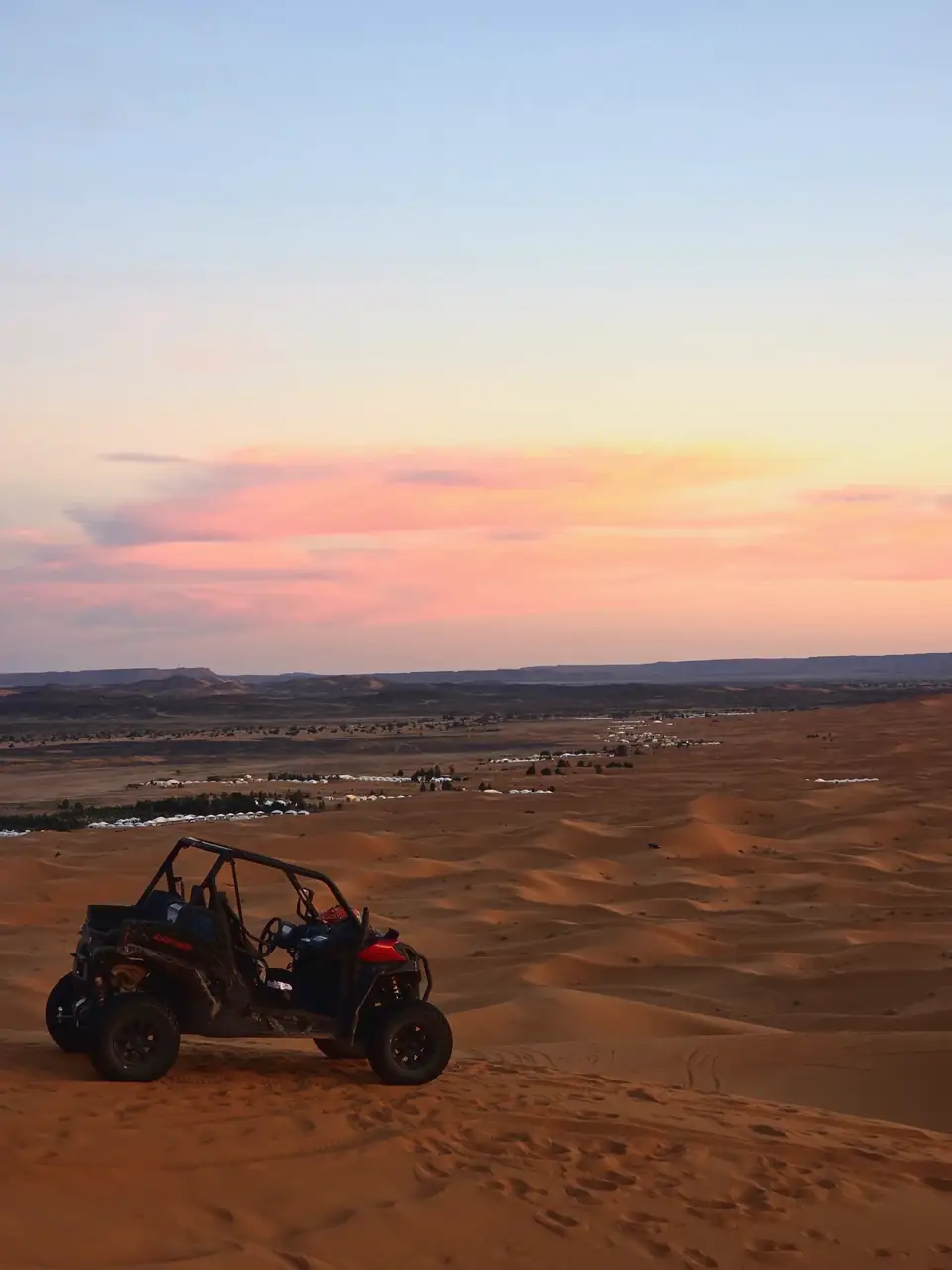
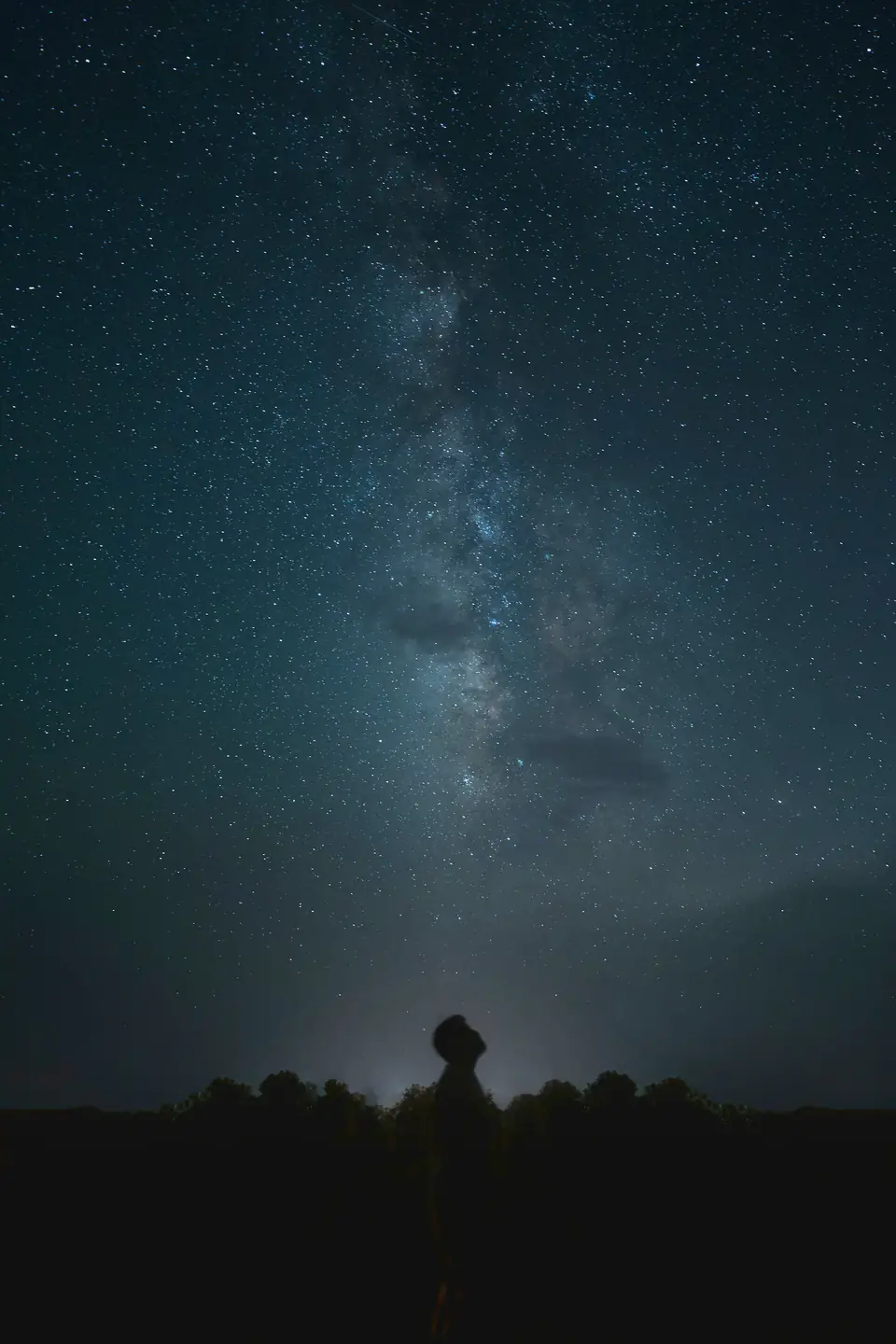
Try to arrive in time to climb a dune before sunset, allowing longer than you think, because soft sand is slow to walk on. Dinner follows in the dining tent, and you can ask us about dinner under the stars. After that, the evening is yours. With little light nearby, a clear, moonless night shows the Milky Way plainly. If the sky matters to you, check the moon phase when you pick your date, or book a stargazing evening.
How cold does it get?
Colder than most people expect. Desert air loses heat quickly after sunset. In January, nights around Merzouga can fall to about 3–6°C, and sometimes lower. Even in spring and autumn, a warm day can turn into a cool night. July and August are the exception, with very hot days and warm nights.
The morning
Sunrise is worth the early alarm. Climb the nearest dune while it is still cool and watch the colour return to the sand. Breakfast comes next, and most guests leave before the heat builds. You can also stay on for a 4×4 excursion or a visit to Khamlia and its Gnawa musicians.
What to bring
- A warm layer, and a proper jacket from November to March.
- Sunglasses, sunscreen and a scarf to keep sand off your face.
- Closed shoes or sandals you can easily empty of sand.
- A small overnight bag, so your main luggage can stay in the vehicle.
- A power bank and a torch or phone light for walking around camp.
Frequently asked questions
Is one night in the desert enough?
One night is enough to see sunset, stars and sunrise. Stay for two if you want to do activities without rushing or have just made a long drive. Either way, the overnight stay can be shaped around your plans.
What is the best month for a desert camp?
March to May and September to November are the most comfortable for most visitors. Our guide to the best time to visit Morocco covers each season.
Can children stay in a desert camp?
Yes. A single night tends to suit families best. Read our guide to planning a family trip.